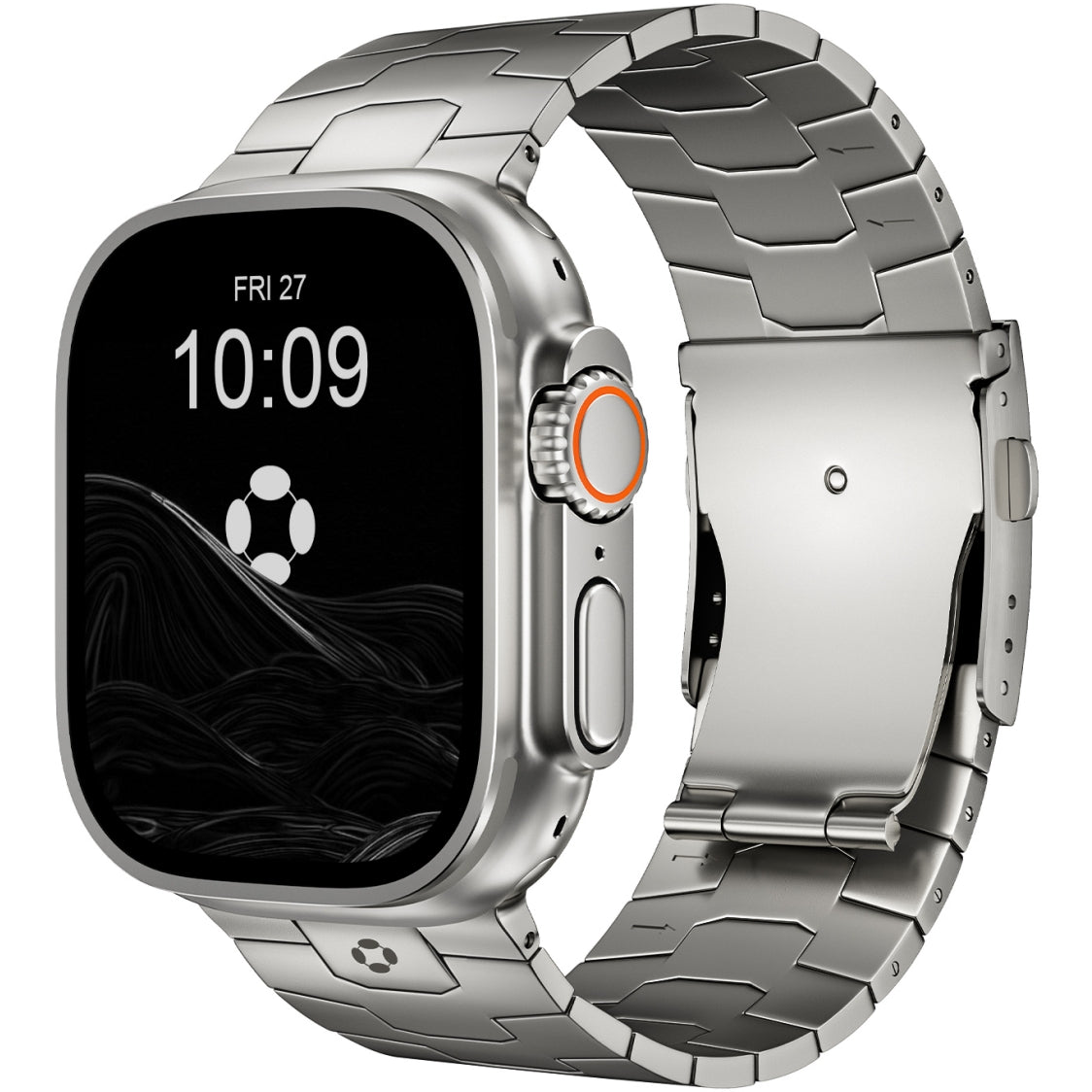
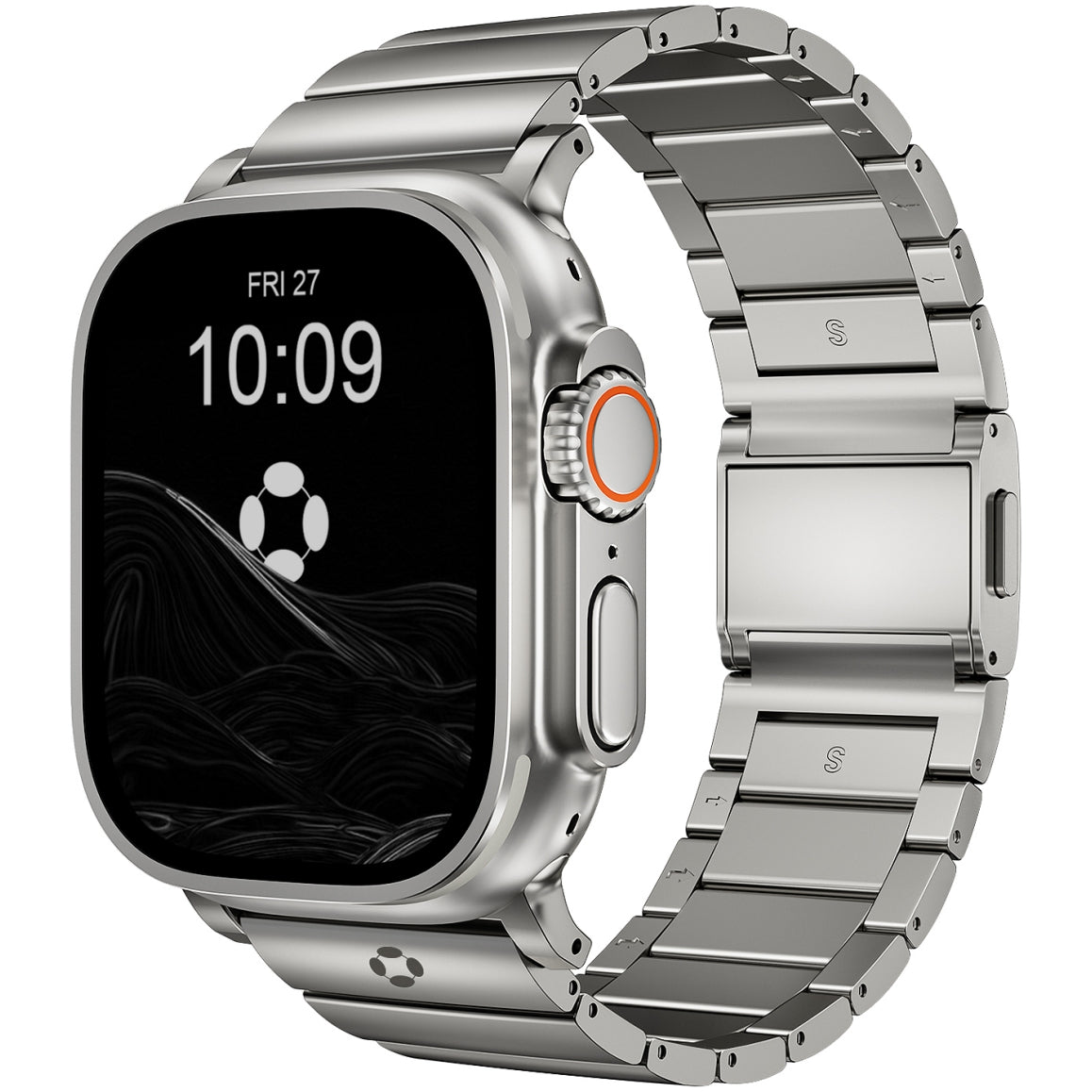
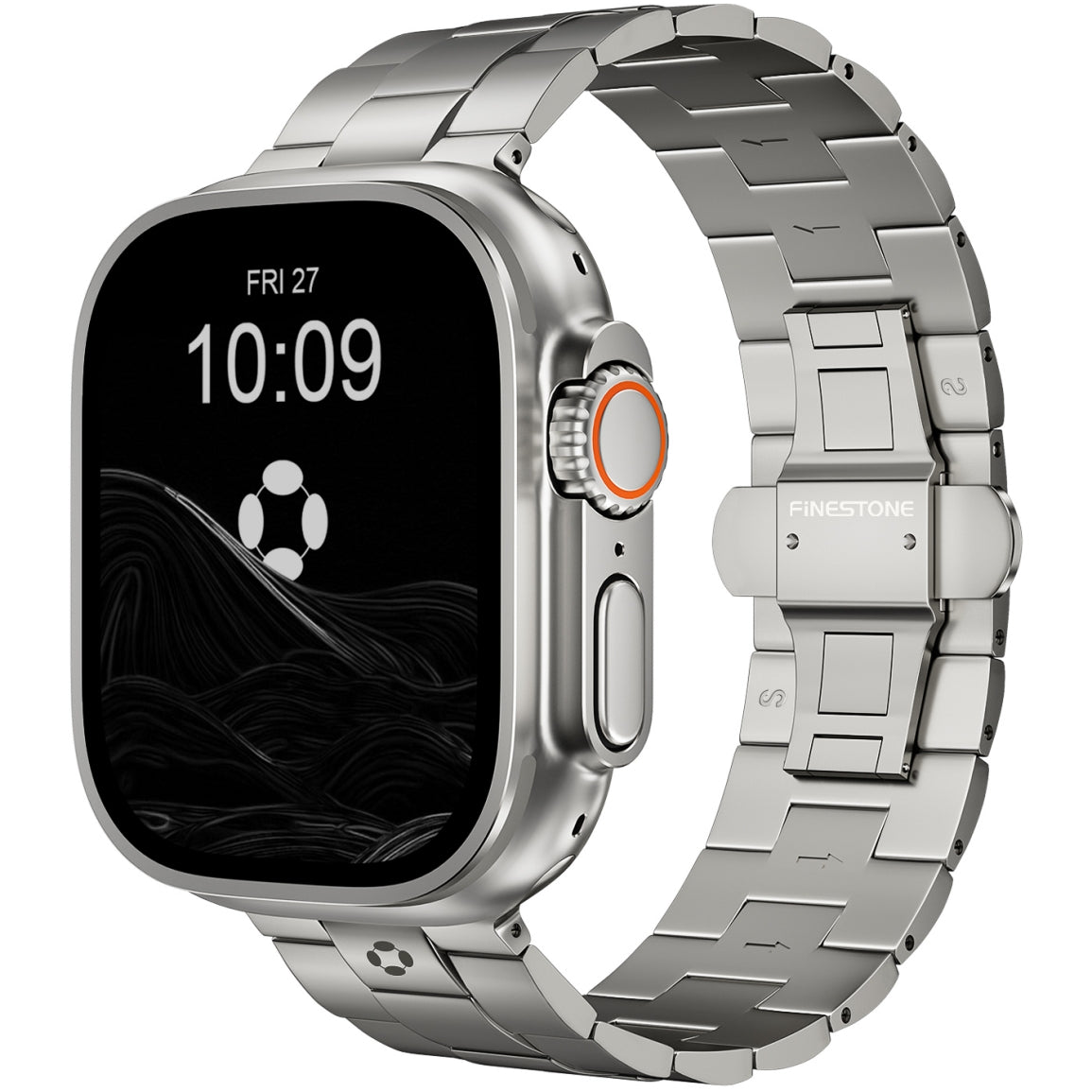
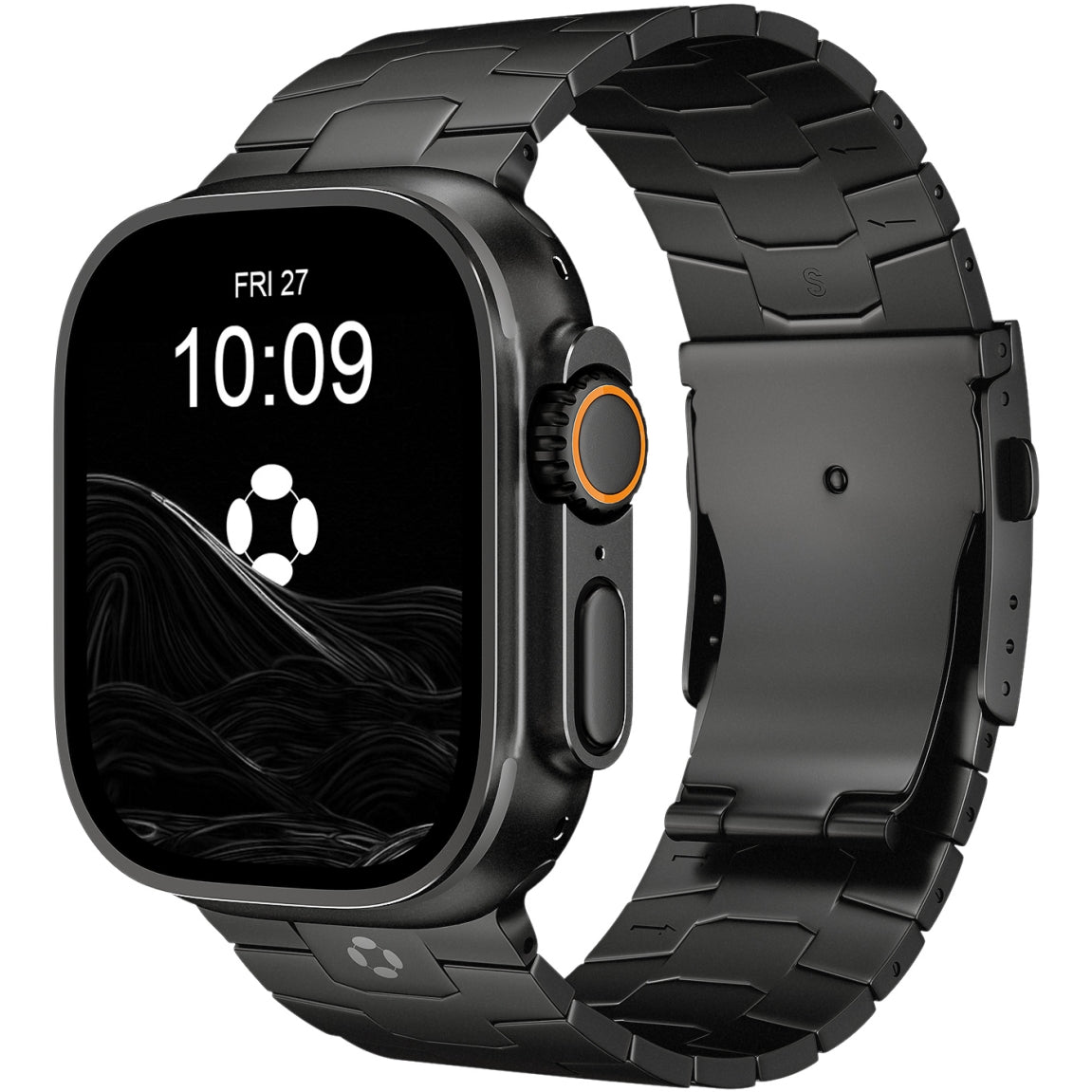
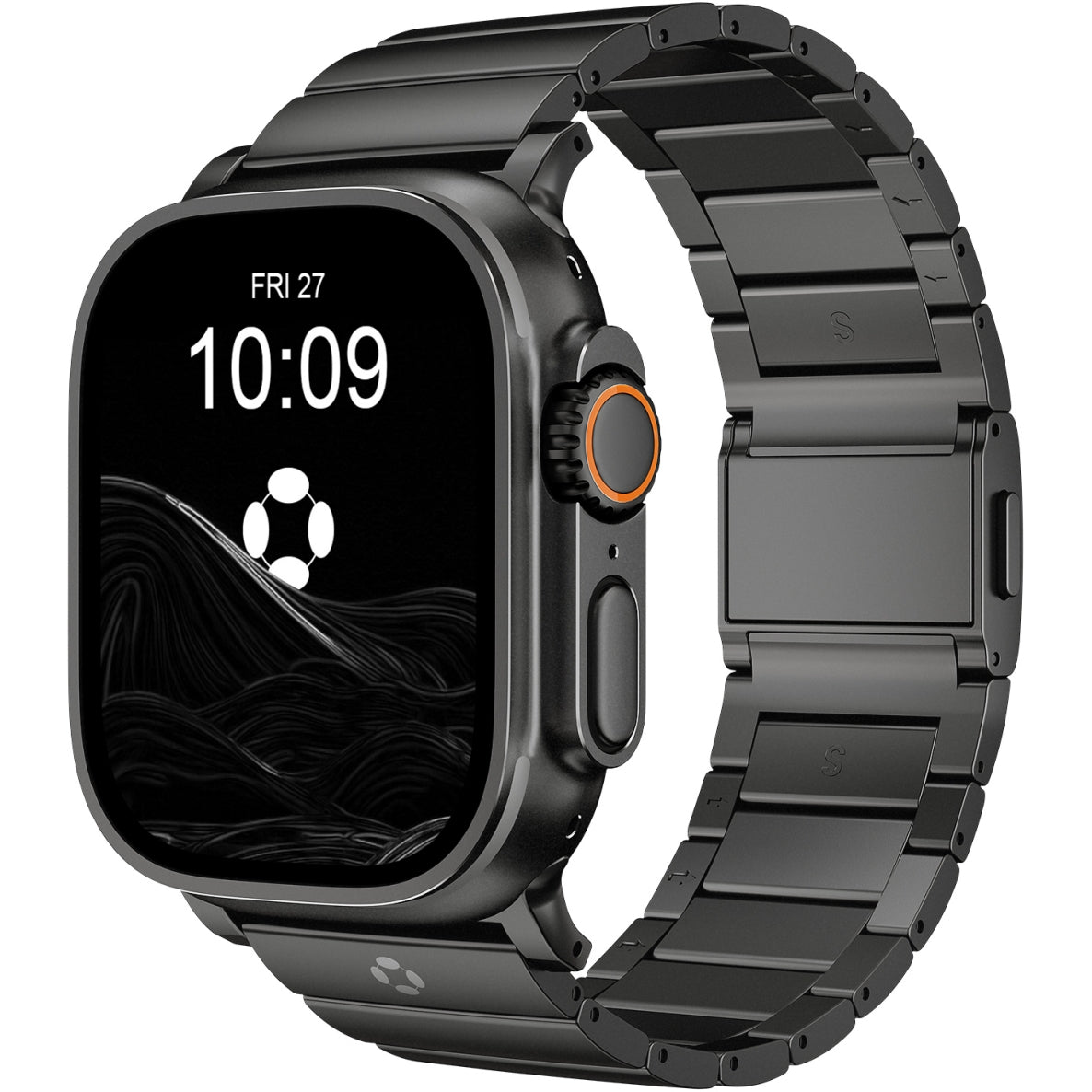

Many people notice it immediately after switching materials: a titanium watch band simply feels lighter and more comfortable than other metal bands. But why is that? Is it just perception—or is there real science behind it?
The answer lies in physics, ergonomics, and thoughtful design.
1. Titanium Has a Lower Density Than Steel
The most direct reason is density.
-
Titanium: ~4.5 g/cm³
-
Stainless steel: ~8.0 g/cm³
That means titanium weighs around 40–45% less than stainless steel for the same volume. Since a watch band wraps around your entire wrist, that difference becomes very noticeable during daily wear.
2. High Strength Without Extra Bulk
Titanium is famous for its exceptional strength-to-weight ratio. This allows watch bands to be:
-
Thinner without sacrificing durability
-
Structurally strong without feeling bulky
-
Secure without adding unnecessary mass
In contrast, steel bands often rely on thicker links to achieve the same strength, which adds weight quickly.
3. Better Balance on the Wrist
A lighter band doesn’t just reduce total weight—it improves balance.
Titanium bands help:
-
Reduce the downward pull of the watch case
-
Prevent the watch from sliding or rotating
-
Create a more centered, stable feel
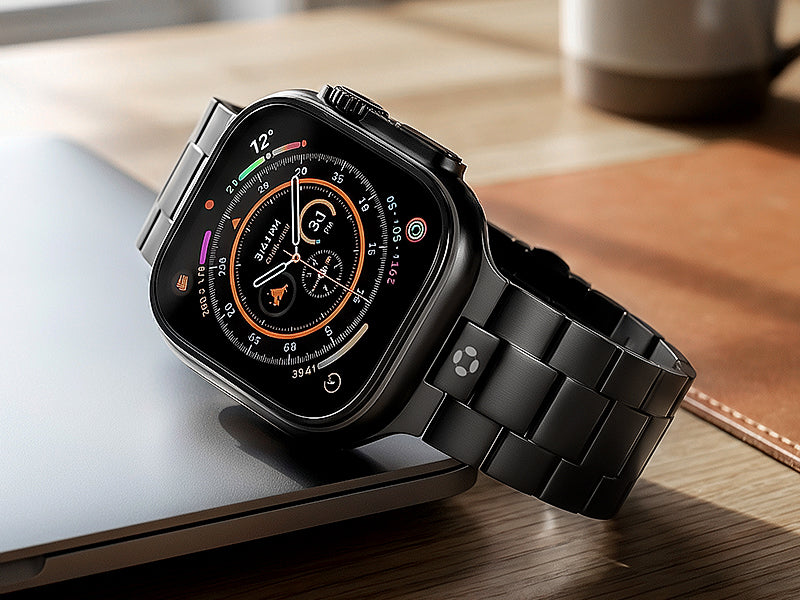
This becomes especially important with larger watch cases like the Apple Watch Ultra.
4. Less Fatigue During All-Day Wear
Heavier metal bands can feel fine initially, but over time they may cause:
-
Wrist fatigue
-
Pressure marks
-
The urge to constantly adjust the watch
Titanium’s lighter weight reduces these issues, which is why many professionals and active users prefer it for long-term wear.
5. Titanium Feels Lighter Than It Is
Comfort isn’t only about grams.
Titanium also:
-
Feels less cold or hot on the skin
-
Has a softer contact sensation than polished steel
-
Often uses brushed or matte finishes that reduce friction
These subtle factors make titanium bands feel even lighter than their actual weight.
6. Why Material Alone Isn’t Enough
Not all titanium bands feel the same.
Design details matter just as much as material:
-
Link shape and thickness
-
Edge finishing
-
Clasp weight
-
How well the band integrates with the watch case
A poorly designed titanium band can still feel awkward or unbalanced.
7. Where Specialized Titanium Bands Make the Difference
This is where brands that focus specifically on titanium stand out.
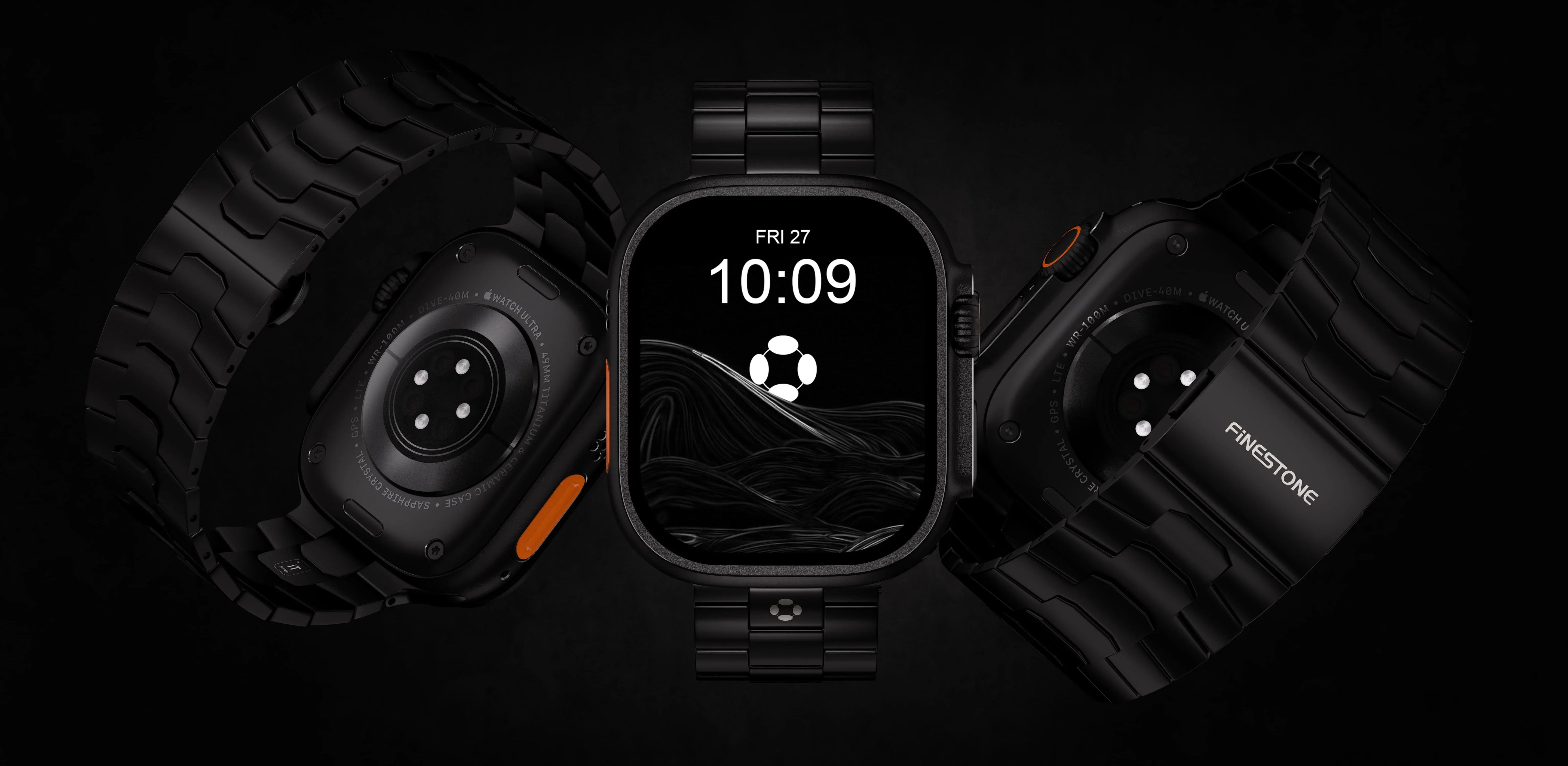
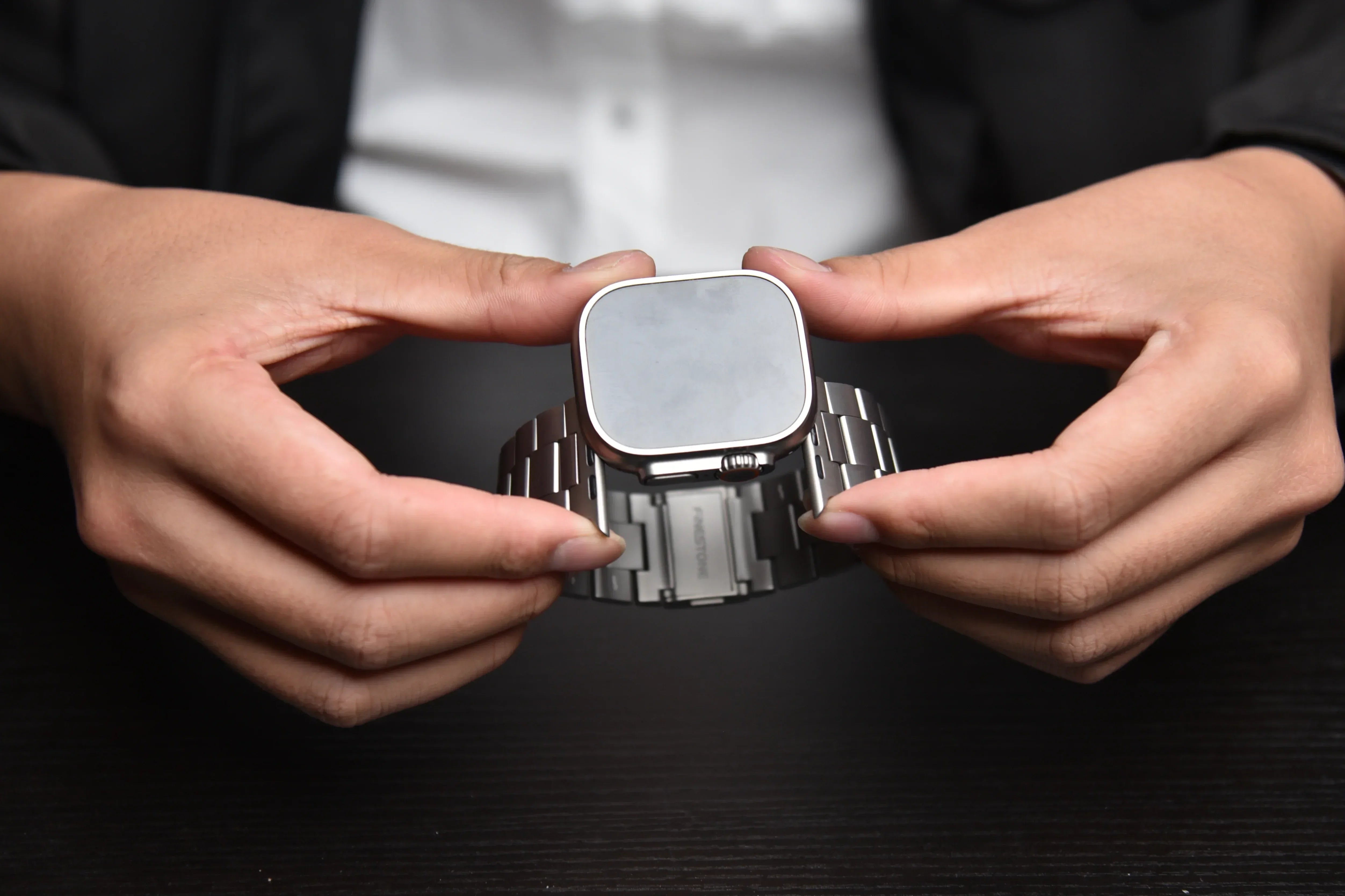
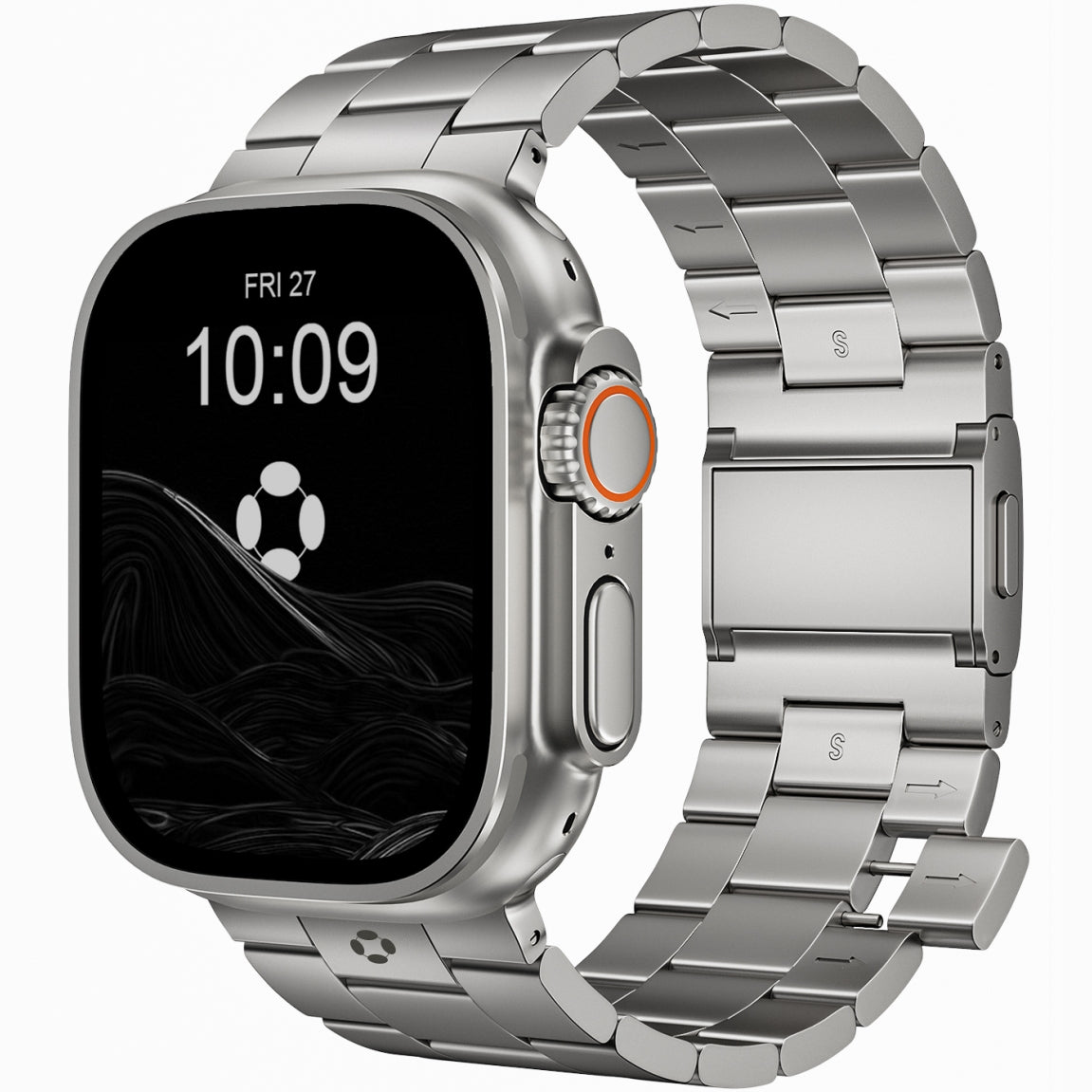
For example, FiNESTONE designs its Apple Watch bands around titanium’s natural advantages—keeping links lightweight, edges smooth, and proportions balanced for larger watch cases. Instead of adding decorative bulk, the emphasis is on comfort, fit, and long-term wearability.

The result is a band that doesn’t just weigh less on paper, but genuinely disappears on the wrist during daily use.
Titanium vs Stainless Steel at a Glance
| Feature | Titanium Band | Stainless Steel Band |
|---|---|---|
| Weight | Significantly lighter | Heavier |
| Comfort | Excellent for all-day wear | Can cause fatigue |
| Balance | Stable, centered feel | Often top-heavy |
| Skin feel | Neutral, soft | Cold, rigid |
| Best use | Daily wear, large watches | Dress-focused looks |
Final Thoughts
Titanium bands feel lighter on the wrist because they combine low density, high strength, and thoughtful design. When done right, titanium doesn’t just reduce weight—it improves balance, comfort, and how the watch integrates with your daily life.
That’s why more Apple Watch users, especially those wearing larger models, are moving toward titanium bands designed with comfort as the priority—not just the material name.