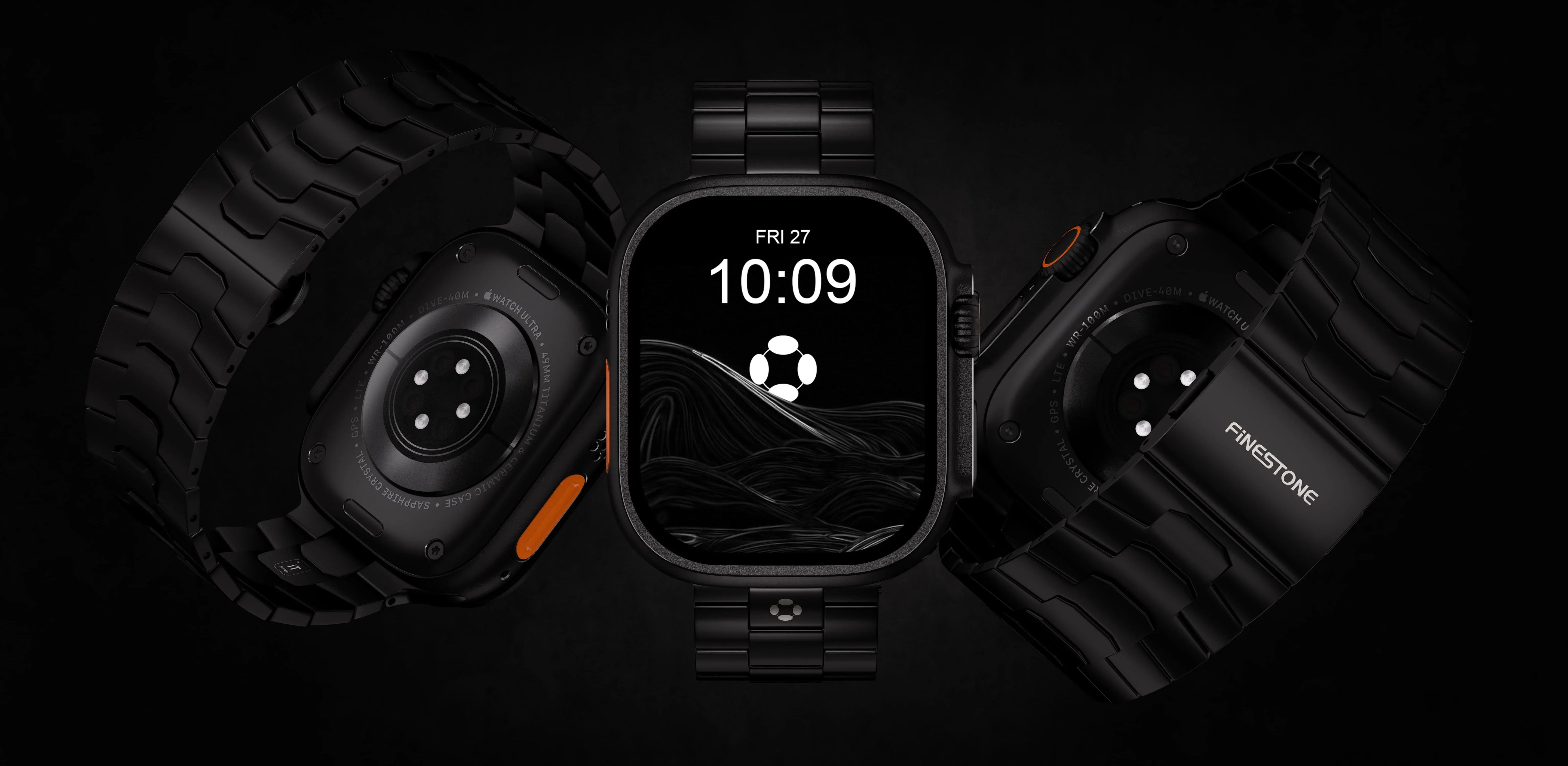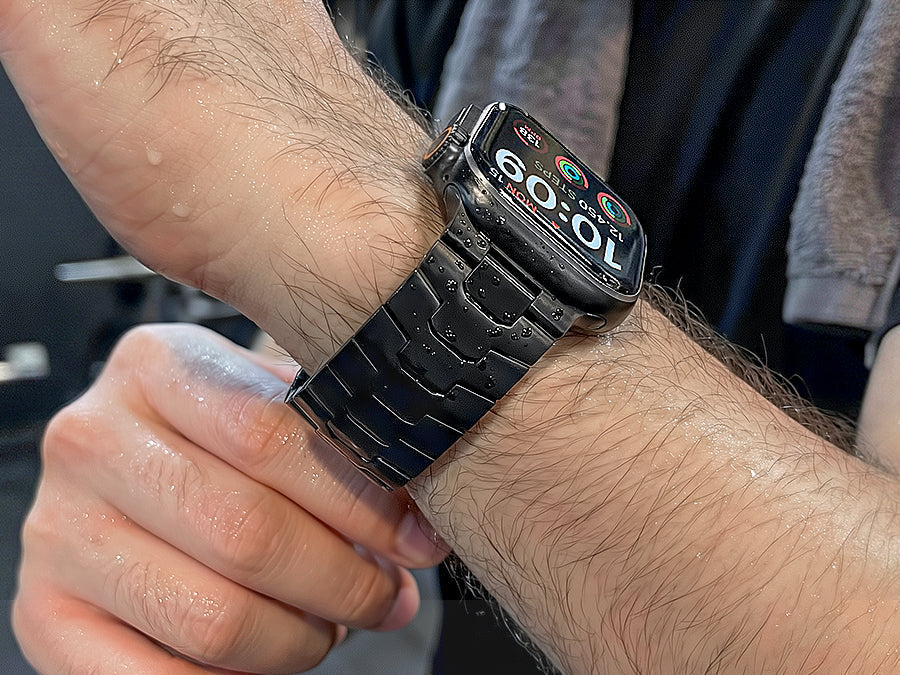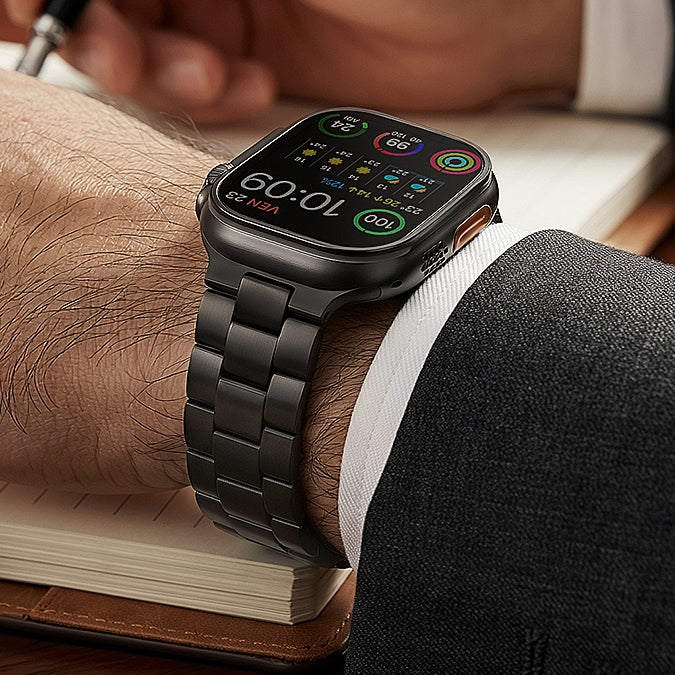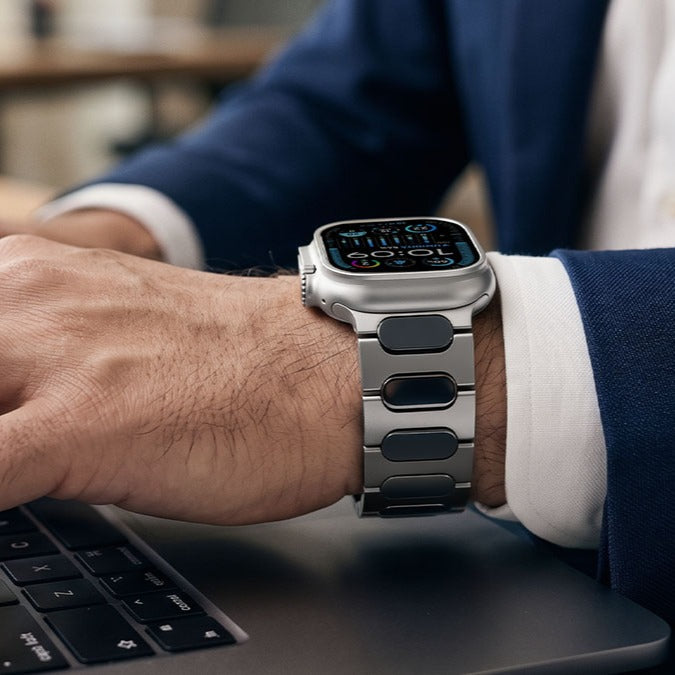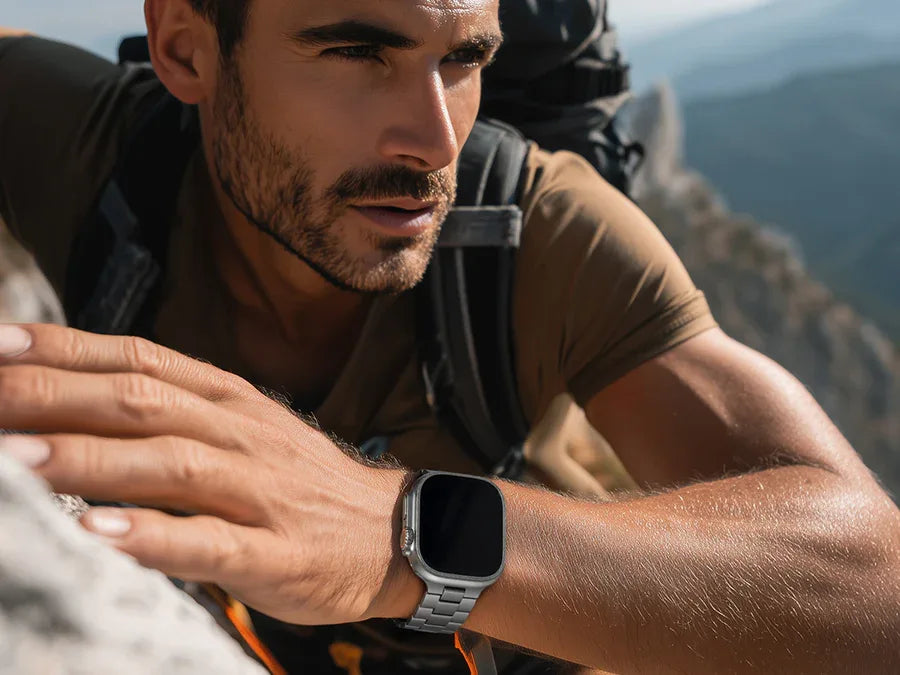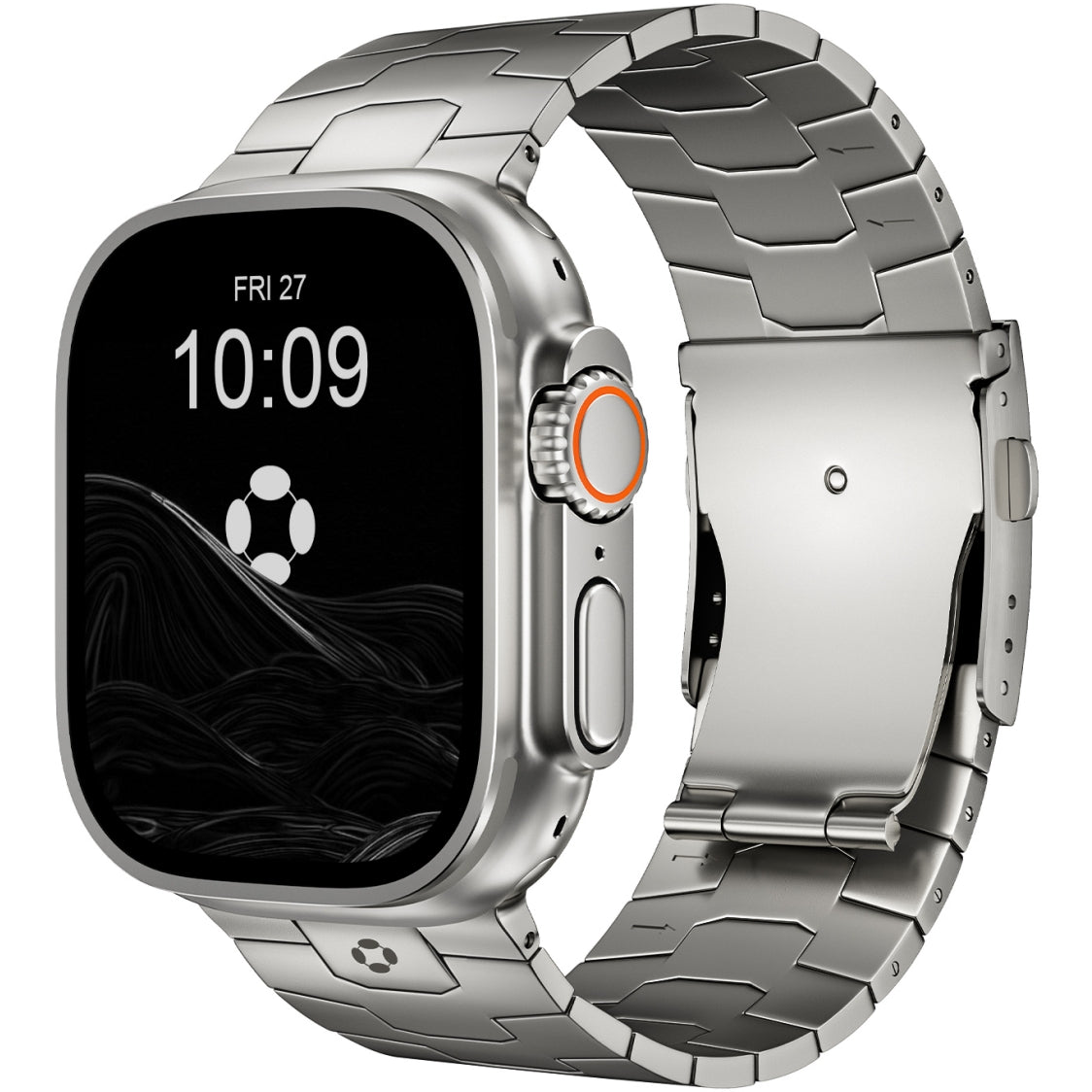
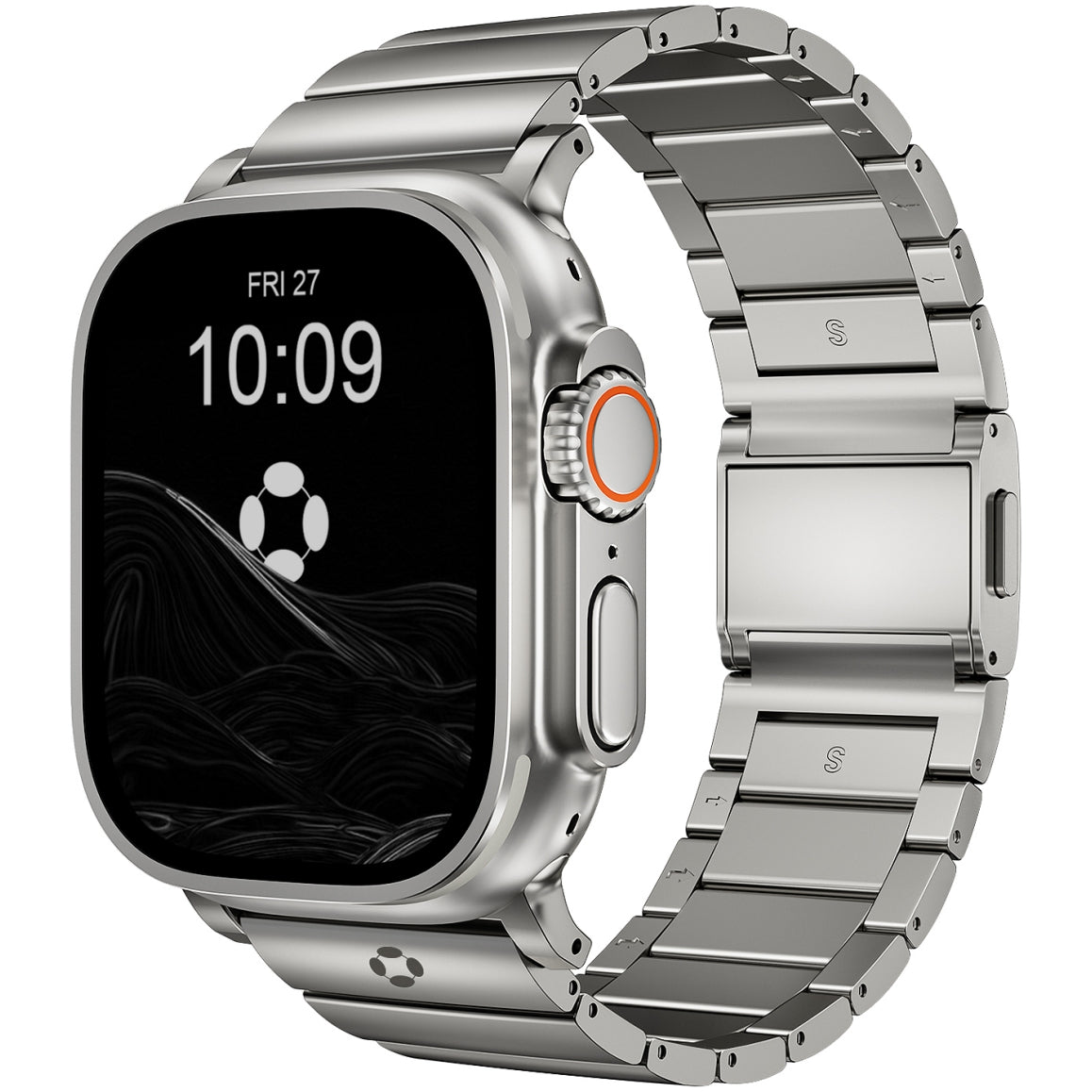
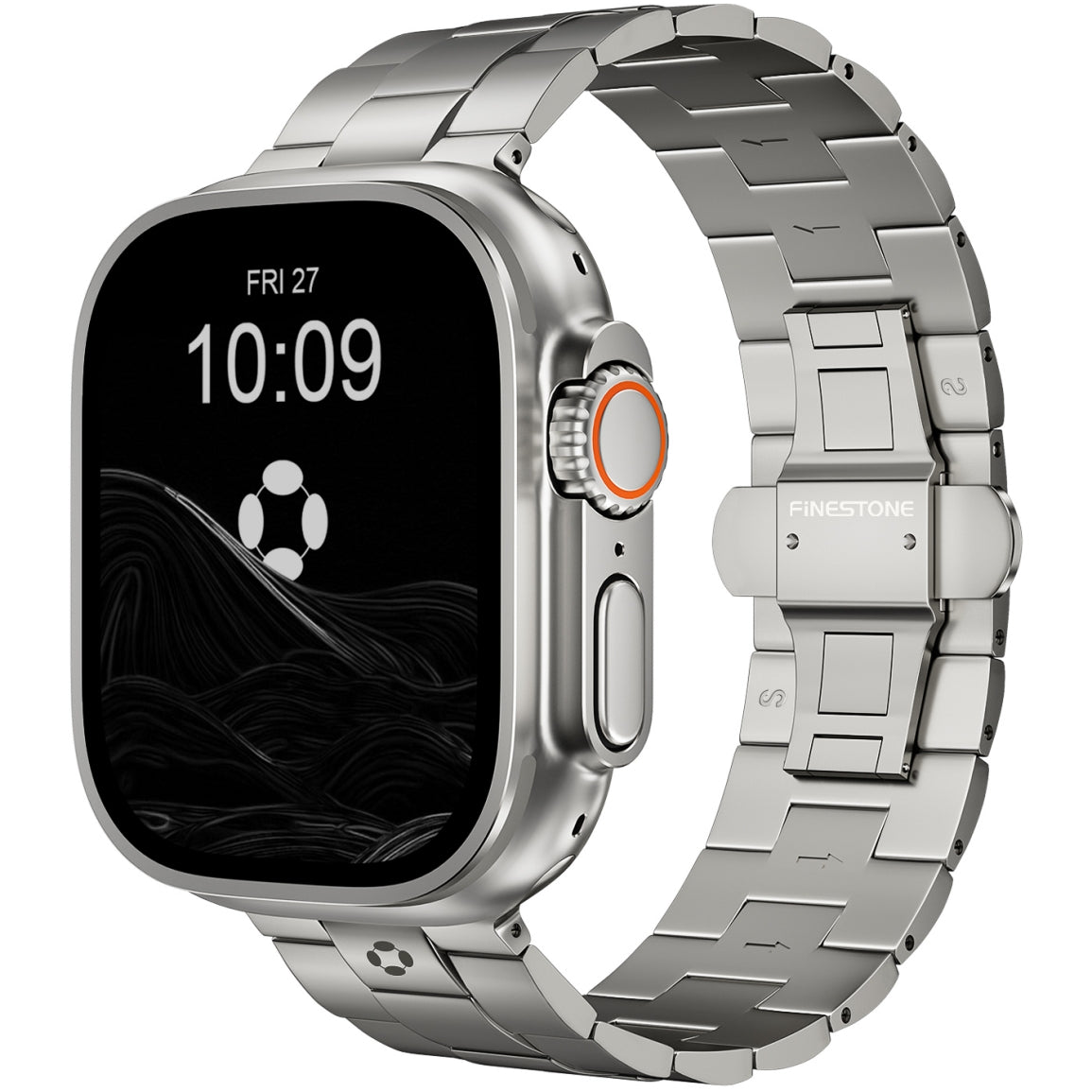

Titanium watch bands are becoming increasingly popular—especially among Apple Watch and Apple Watch Ultra users.
But as demand grows, so do misunderstandings.
Some people think titanium bands are fragile. Others assume they’re just a marketing gimmick or not worth the price. In reality, many of these beliefs are simply myths.
Let’s break down the most common myths about titanium watch bands—and uncover the facts behind them.
Myth 1: Titanium Watch Bands Are Too Light to Be Durable
This is probably the biggest misconception.
Many people associate “lightweight” with “weak,” but titanium is actually stronger than stainless steel by weight. That’s why it’s used in aerospace, medical implants, and high-performance tools.
A titanium watch band feels lighter on the wrist, but that doesn’t mean it’s fragile. In fact, its strength-to-weight ratio is one of its biggest advantages.
Reality:
Lightweight ≠ weak. Titanium is both light and strong.
Myth 2: Titanium Scratches Easily
Not all titanium bands are the same.
Raw titanium can show surface marks over time, but high-quality titanium watch bands often feature surface treatments like DLC (Diamond-Like Carbon) coating, which dramatically improves scratch resistance.
Compared to polished stainless steel—which shows scratches very quickly—well-finished titanium often ages more gracefully.
Reality:
With proper finishing, titanium is highly scratch-resistant and suitable for daily wear.
Myth 3: Titanium Watch Bands Look Cheap or Dull
Some assume titanium lacks the shine of stainless steel and therefore looks “cheap.”
In reality, titanium has a modern, refined, understated aesthetic. Its matte or satin finish appeals to people who prefer a clean, professional look over high-gloss shine.
Luxury doesn’t always mean flashy—and many premium watch brands use titanium specifically for this reason.
Reality:
Titanium looks subtle, modern, and premium—just in a different way than steel.
Myth 4: Titanium Bands Are Uncomfortable on the Skin
This myth couldn’t be further from the truth.
Titanium is hypoallergenic and nickel-free, making it one of the safest metals for sensitive skin. It’s widely used in medical implants because it rarely causes allergic reactions.
For people who experience itching or irritation from stainless steel bands, switching to titanium can be a noticeable improvement.
Reality:
Titanium is one of the most skin-friendly materials you can wear.
Myth 5: Titanium Is Only for Sports or Outdoor Use
While titanium is excellent for active lifestyles, it’s not limited to sports.
Its lightweight comfort makes it ideal for all-day wear, while its refined finish works just as well in professional or formal settings. That’s why many users choose titanium as their daily band, not just a workout option.
Reality:
Titanium is versatile—perfect for daily, business, and active use.
Myth 6: Stainless Steel Is Always the “More Premium” Choice
Stainless steel has long been associated with luxury watches, so it’s easy to assume it’s automatically superior.
In truth, titanium is often more expensive to process, harder to machine, and more advanced as a material. Its premium lies in performance, comfort, and engineering—not just weight or shine.
Both materials have their place, but “heavier” doesn’t always mean “better.”
Reality:
Titanium is premium in a modern, functional way—just different from traditional steel.
Final Thoughts
Titanium watch bands are often misunderstood because they challenge traditional ideas of what a “luxury” watch band should feel like.
Once you move past the myths, titanium stands out for what it truly offers:
-
Lightweight comfort
-
Excellent durability
-
Skin-friendly wear
-
Modern, understated style
As more users prioritize comfort and everyday usability—especially with larger watches like the Apple Watch Ultra—titanium is no longer a niche choice. It’s becoming the smart one.