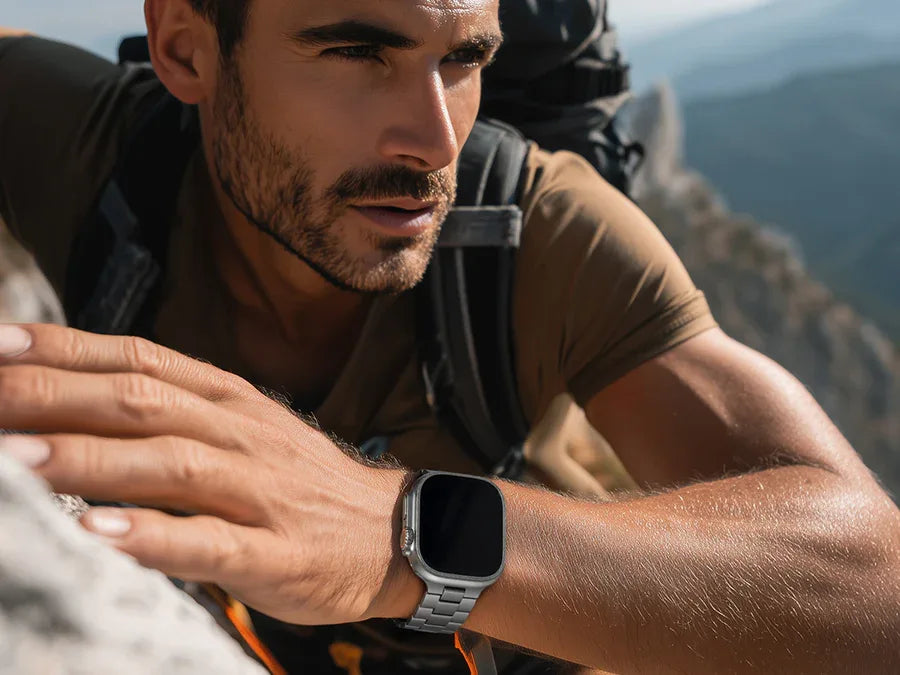

Metal watch bands are loved for their durability, structure, and timeless look. Whether paired with a classic timepiece or a modern smartwatch, they instantly elevate style. But one common concern remains:
Do metal watch bands scratch easily?
The short answer: yes, all metal bands can scratch — but some materials, finishes, and care habits make scratches far less noticeable and easier to manage.
Let’s break down why metal bands scratch, which metals hold up best, and how you can keep your band looking sharp for years.
🔍 Why Metal Watch Bands Get Scratches
Even the toughest metals aren’t scratch-proof. Scratches happen because of friction and contact with harder surfaces in everyday life.
Common causes include:
-
Brushing against desks and tables
-
Contact with zippers, keys, or jewelry
-
Resting your wrist on rough surfaces
-
Accidental knocks during daily activities
Since watches are worn on the wrist — one of the most active parts of the body — metal bands naturally experience wear over time.
🧪 Do All Metals Scratch the Same Way?
No — different metals react differently to wear.
1️⃣ Stainless Steel
Pros
✔ Strong and corrosion-resistant
✔ Widely used and affordable
Cons
✖ Shows scratches clearly, especially polished finishes
✖ Heavier than other options
Polished stainless steel tends to show fine hairline scratches quickly.
2️⃣ Titanium
Titanium is known for its strength-to-weight ratio and subtle appearance.
Pros
✔ Lighter than stainless steel
✔ Naturally corrosion-resistant
✔ Often hides scratches better with brushed finishes
Cons
✖ Can still scratch with hard impact
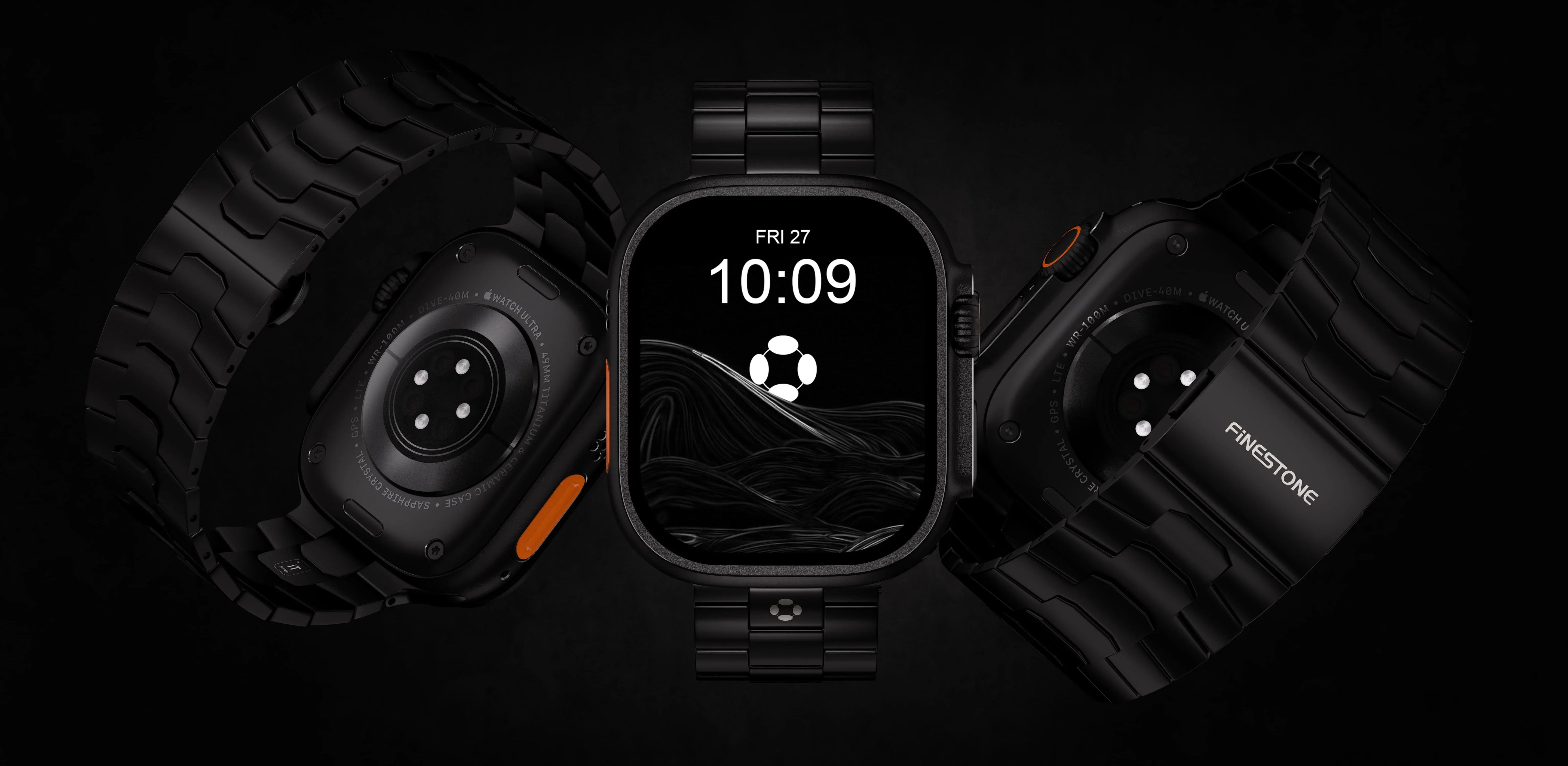
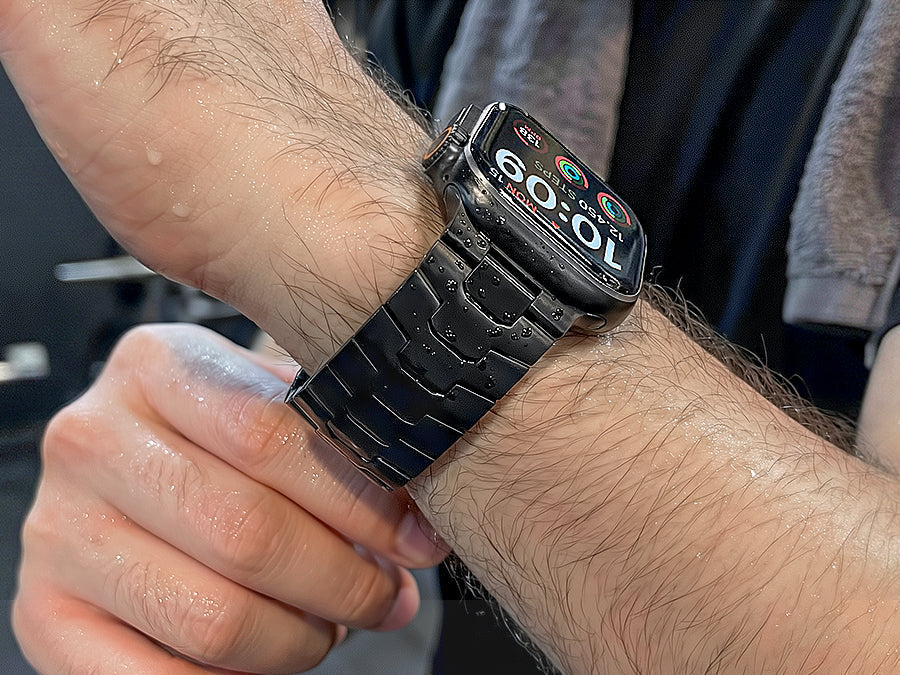
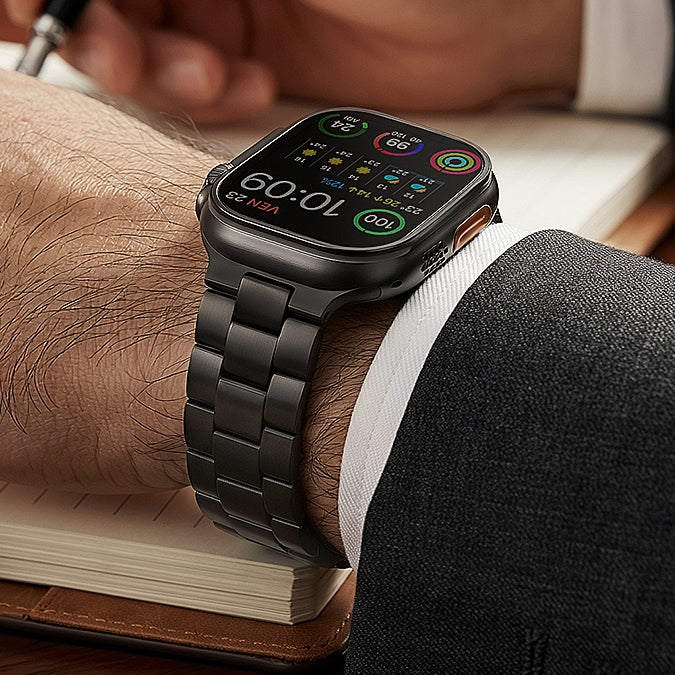
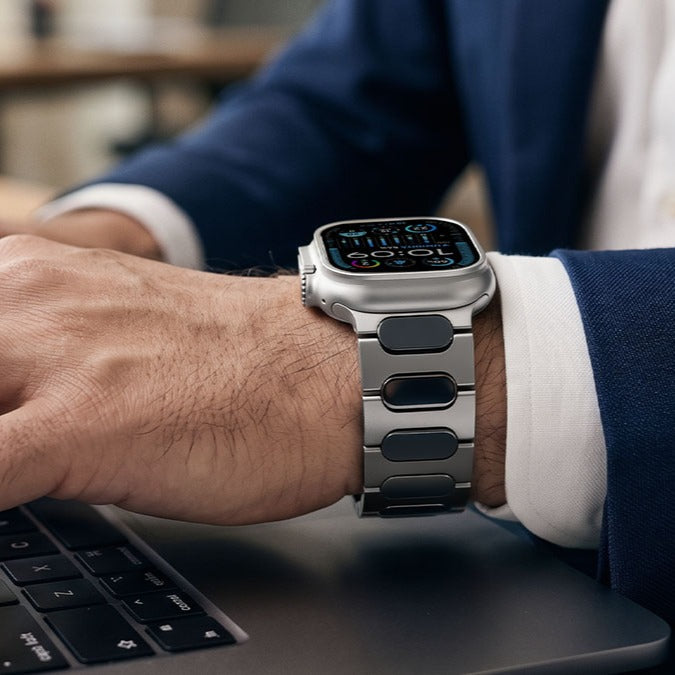
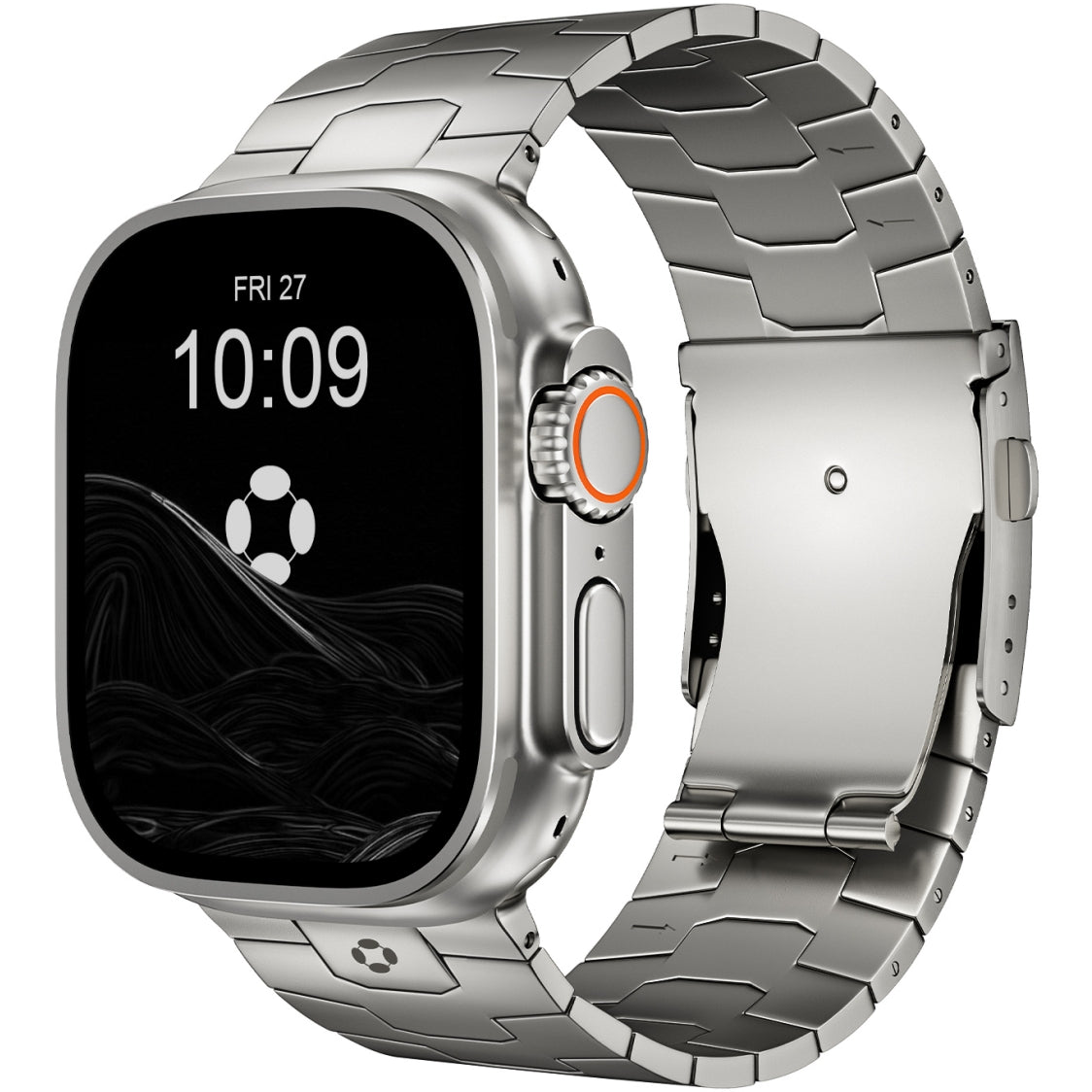
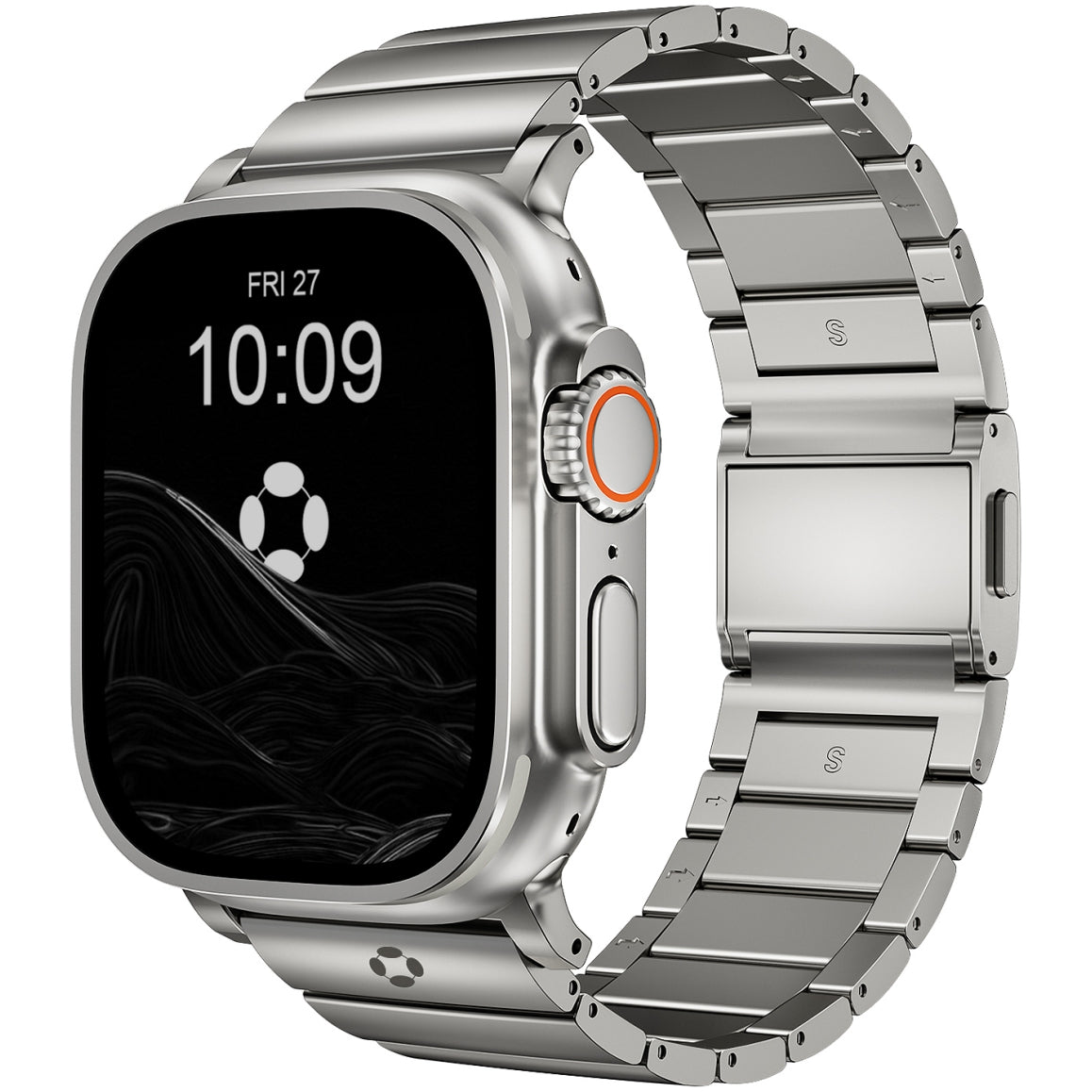
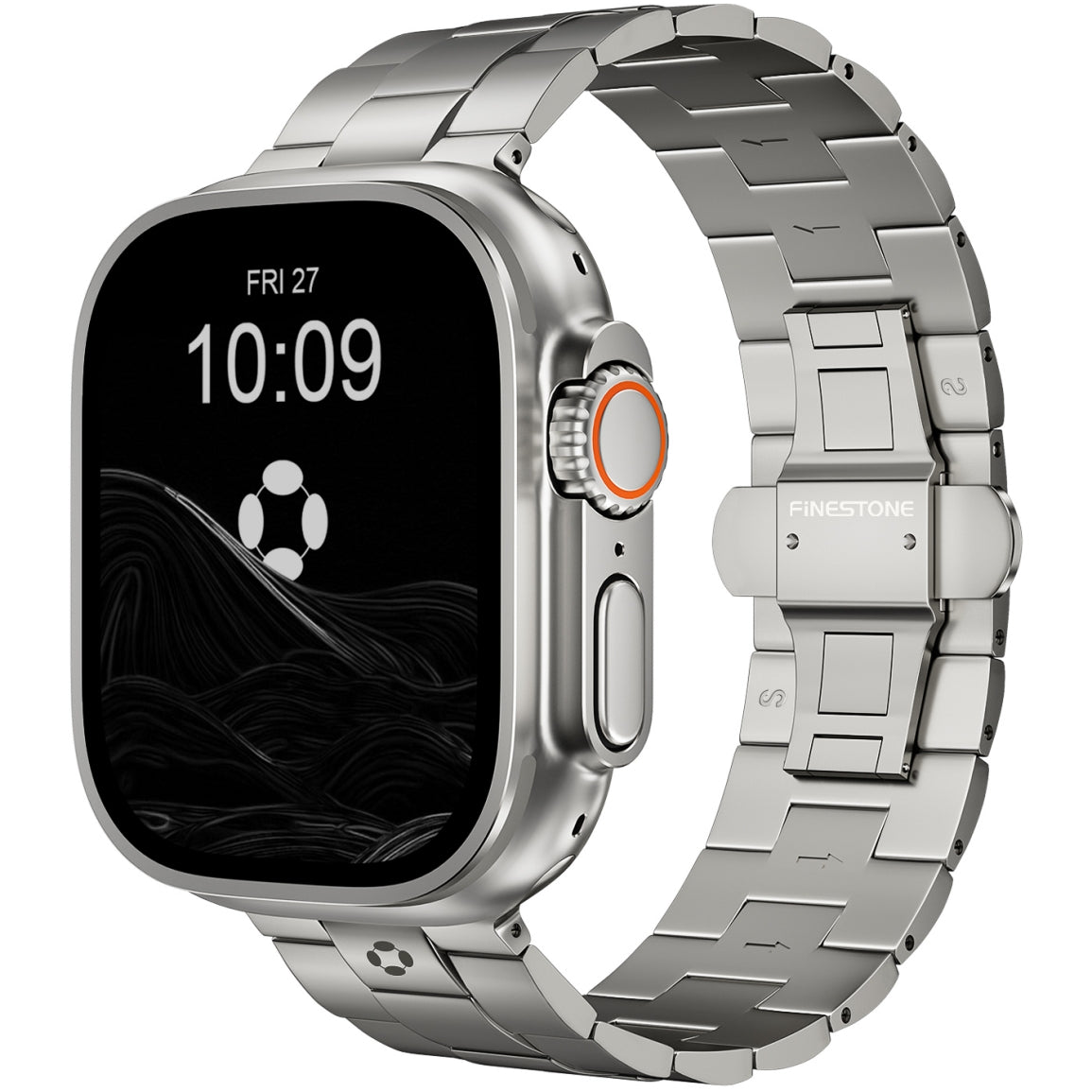
A brushed titanium band — like the Finestone titanium Apple Watch band — tends to disguise everyday wear better than shiny metals, maintaining a clean, refined look even with regular use.
3️⃣ Coated or Plated Metals
Some metal bands use coatings like PVD (Physical Vapor Deposition) for color and scratch resistance.
Pros
✔ Harder outer layer
✔ Stylish finishes (black, gold, graphite)
Cons
✖ Deep scratches can reveal the base metal
✖ Coating wear may show over time
These can resist minor scratches but may look worse if deeply damaged.
✨ The Role of Finish: Brushed vs Polished
The finish on your metal band makes a huge difference in how scratches appear.
| Finish Type | Scratch Visibility | Look |
|---|---|---|
| Polished | High | Shiny, reflective |
| Brushed/Matte | Low | Soft, understated |
| Bead-Blasted | Very Low | Textured, industrial |
Brushed and matte finishes scatter light, making small scratches much harder to see compared to mirror-polished surfaces.
🧠 Are Scratches Always a Bad Thing?
Not necessarily. Many watch enthusiasts appreciate the natural patina that develops over time.
Light scratches:
✔ Show character
✔ Reflect daily wear
✔ Often blend into brushed finishes
However, deep gouges or dents are less desirable — and usually caused by hard impacts rather than daily use.
🛡 How to Prevent Metal Band Scratches
While you can’t avoid all wear, you can reduce it significantly:
✔ Be mindful of surfaces
Avoid dragging your wrist across rough desks or stone countertops.
✔ Remove your watch during heavy tasks
DIY work, lifting weights, or moving furniture can cause deep scratches.
✔ Store properly
Keep your watch separate from keys or jewelry when not worn.
✔ Choose brushed finishes
They naturally hide minor wear.
🧼 How to Reduce the Appearance of Scratches
Light surface scratches
-
Often blend naturally over time
-
Can sometimes be softened with professional refinishing
Deep scratches
-
May require polishing or refinishing by a specialist
-
Not always fully removable without affecting the finish
For coated bands, refinishing can be more complicated, so prevention matters more.
⚖️ So… Do Metal Bands Scratch Easily?
Yes — but “easily” depends on:
-
The metal type
-
The finish
-
Your daily activities
-
How well you care for it
Brushed titanium and matte metals tend to show wear the least, while polished stainless steel highlights every mark.