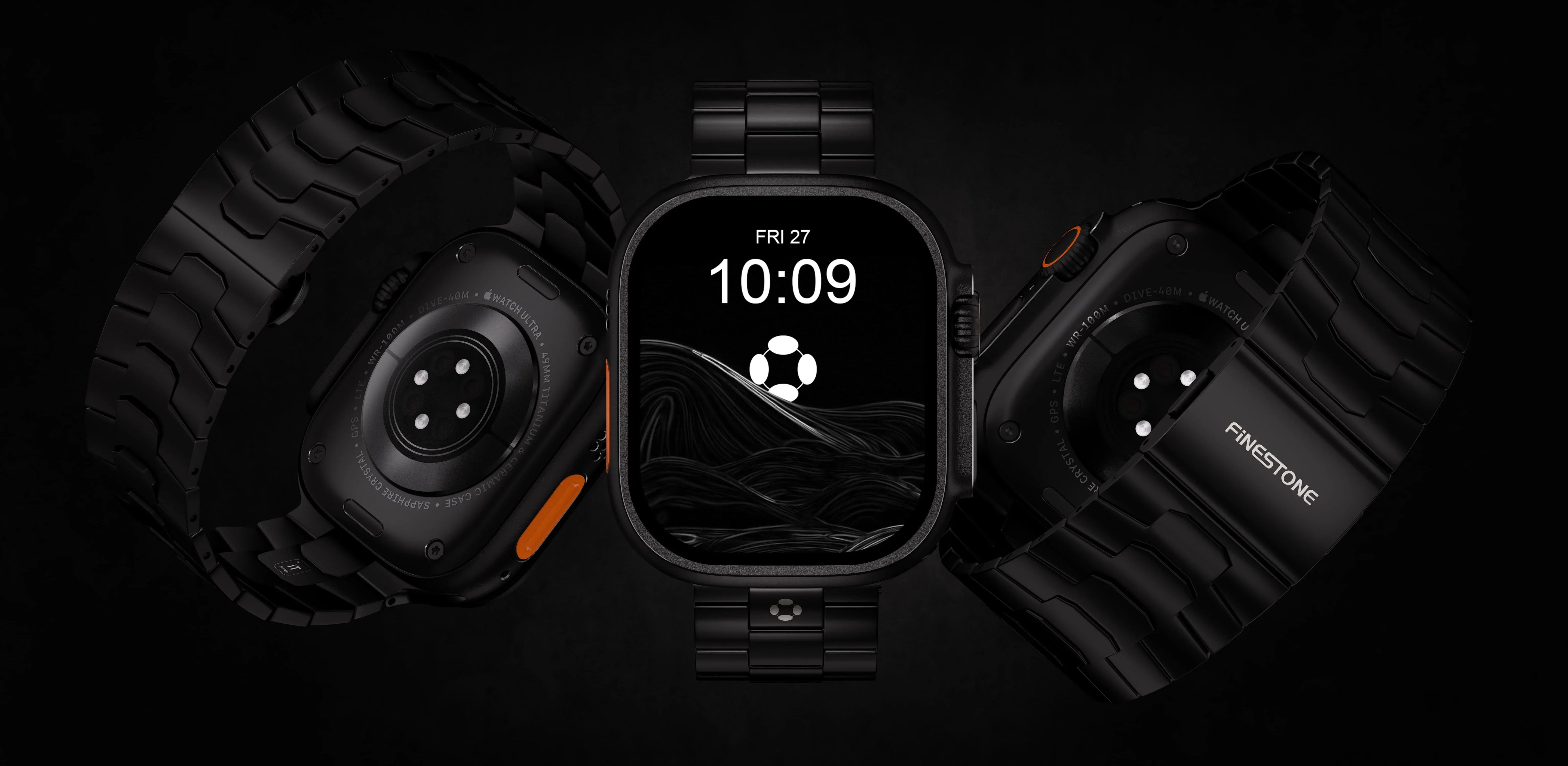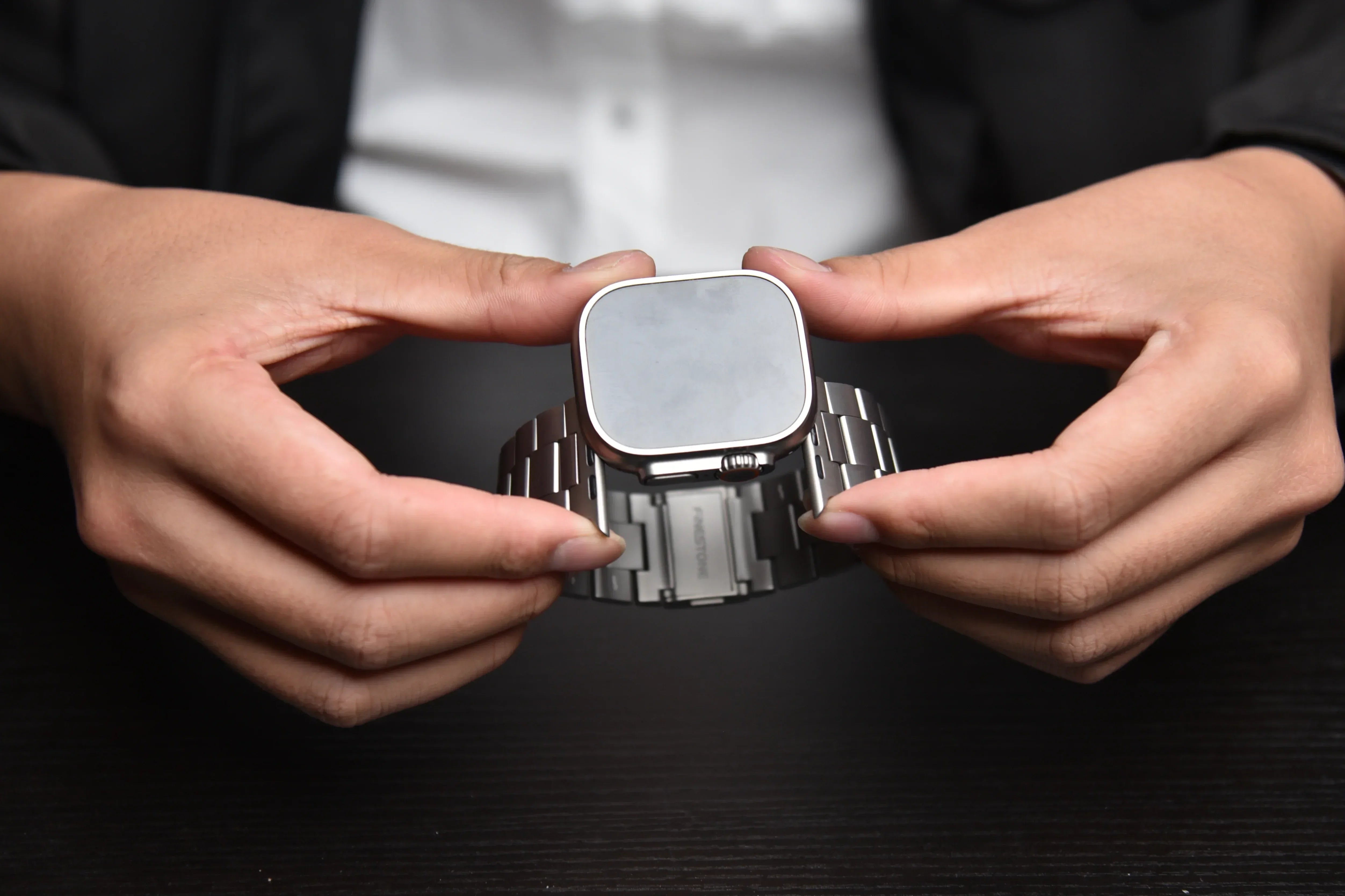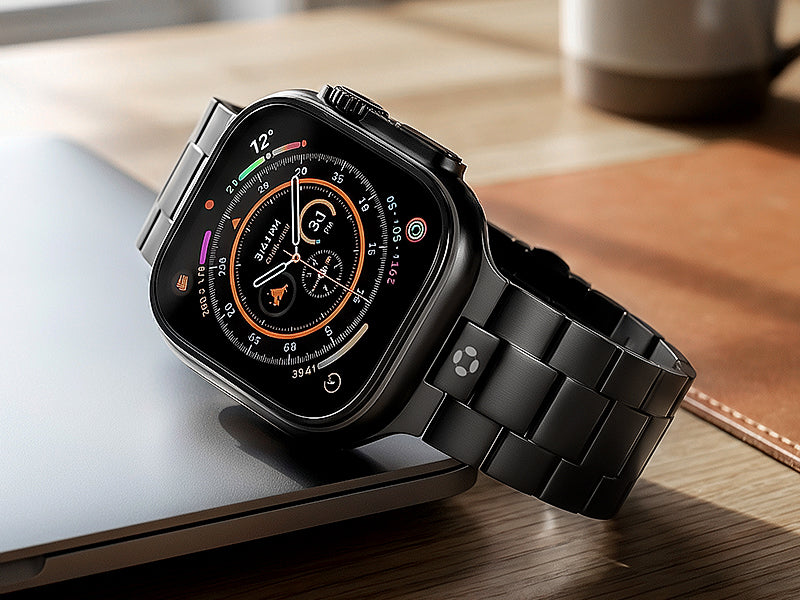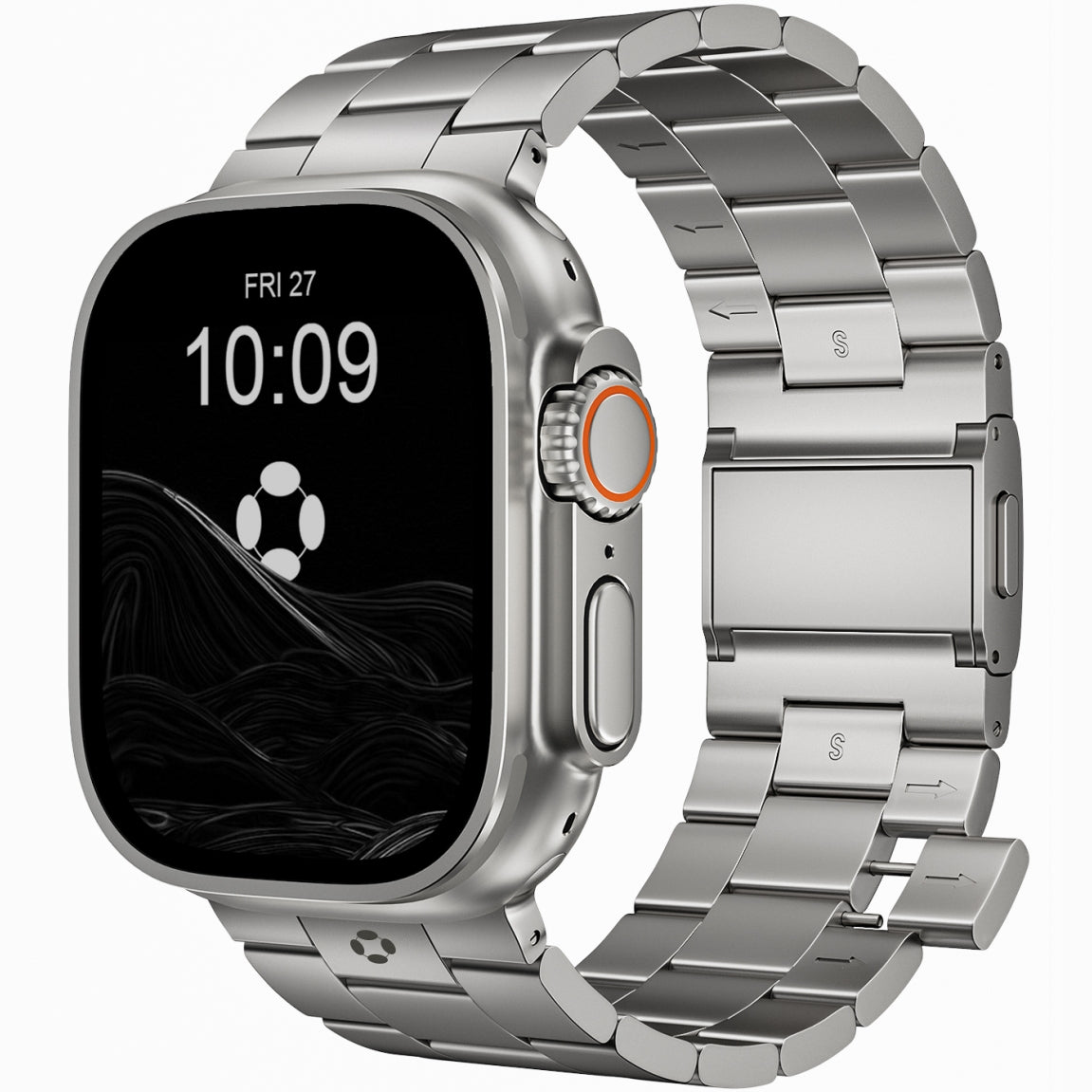
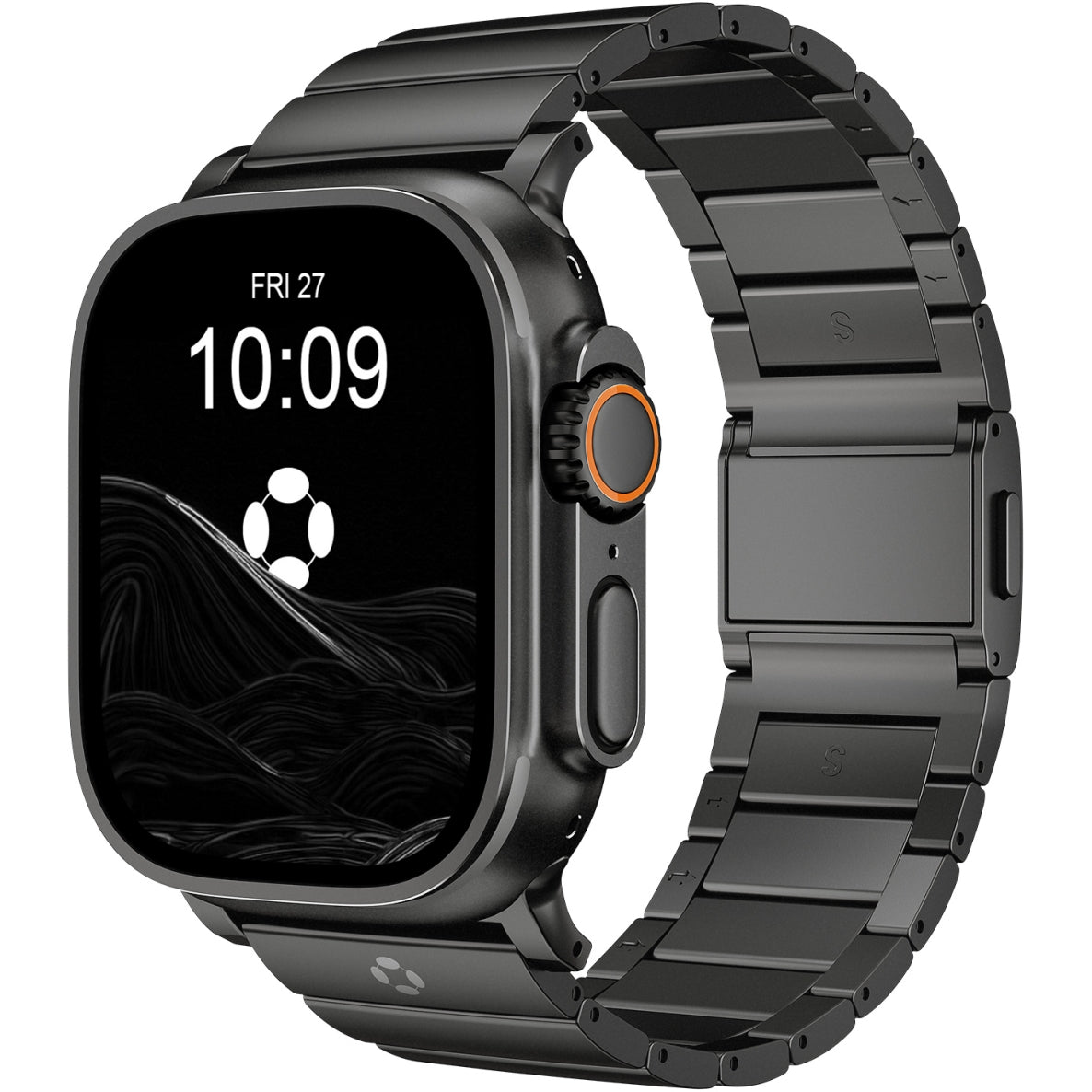

A Complete Guide for Watch Band Buyers
Titanium has become one of the most sought-after materials in modern watch bands—especially for Apple Watch users who value comfort, durability, and a premium feel. But when shopping, you’ll often see two terms used interchangeably: pure titanium and titanium alloy.
They’re not the same.
This guide explains the real differences between titanium alloy and pure titanium, how each performs in daily wear, and which one is better for watch bands.
What Is Pure Titanium?
Pure titanium usually refers to Grade 2 titanium, which is commercially pure (around 99% titanium).
Key characteristics of pure titanium:
-
Extremely lightweight
-
Naturally corrosion resistant
-
Hypoallergenic and skin-safe
-
Matte, understated finish
-
Slightly softer than alloys
Because of its softness, pure titanium is prized for comfort and wearability, especially for people with sensitive skin.
What Is Titanium Alloy?
A titanium alloy combines titanium with small amounts of other metals such as aluminum and vanadium. The most common is Grade 5 titanium (Ti-6Al-4V).
Key characteristics of titanium alloy:
-
Stronger and harder than pure titanium
-
Better scratch resistance
-
Slightly heavier than pure titanium
-
Darker, more metallic appearance
-
Used in aerospace and medical implants
Titanium alloys are designed for strength and structural durability.
Titanium Alloy vs Pure Titanium: Side-by-Side Comparison
| Feature | Pure Titanium (Grade 2) | Titanium Alloy (Grade 5) |
|---|---|---|
| Weight | Lighter | Slightly heavier |
| Strength | Moderate | Very high |
| Scratch Resistance | Good | Better |
| Comfort | Excellent | Very good |
| Skin Sensitivity | Best | Still hypoallergenic |
| Finish | Matte, natural | Darker, more industrial |
| Aging | Develops soft patina | Holds shape longer |
Which One Feels Better on the Wrist?
For most people, pure titanium feels lighter and more comfortable during all-day wear.
You’ll notice:
-
Less wrist fatigue
-
Better airflow
-
Reduced pressure points
Titanium alloy, while still comfortable, feels slightly more substantial—something some users actually prefer for a “solid” watch feel.
Which Is More Scratch Resistant?
Titanium alloy wins here.
Because it’s harder:
-
It resists deeper scratches better
-
Maintains sharp edges longer
-
Holds polished details more effectively
However, pure titanium scratches tend to:
-
Be shallower
-
Blend into the surface
-
Create a uniform, worn-in look over time
For everyday wear, both perform well—but they age differently.
Which One Is Better for Sensitive Skin?
Both materials are hypoallergenic, but pure titanium is the safest choice for extremely sensitive skin.
Why?
-
Fewer alloying elements
-
Less chance of trace metal irritation
-
Widely used in medical implants
If you’ve ever reacted to stainless steel bands, pure titanium is often the best upgrade.
Why Some Brands Choose One Over the Other
Watch band brands select materials based on:
-
Target user (comfort vs durability)
-
Design style
-
Manufacturing complexity
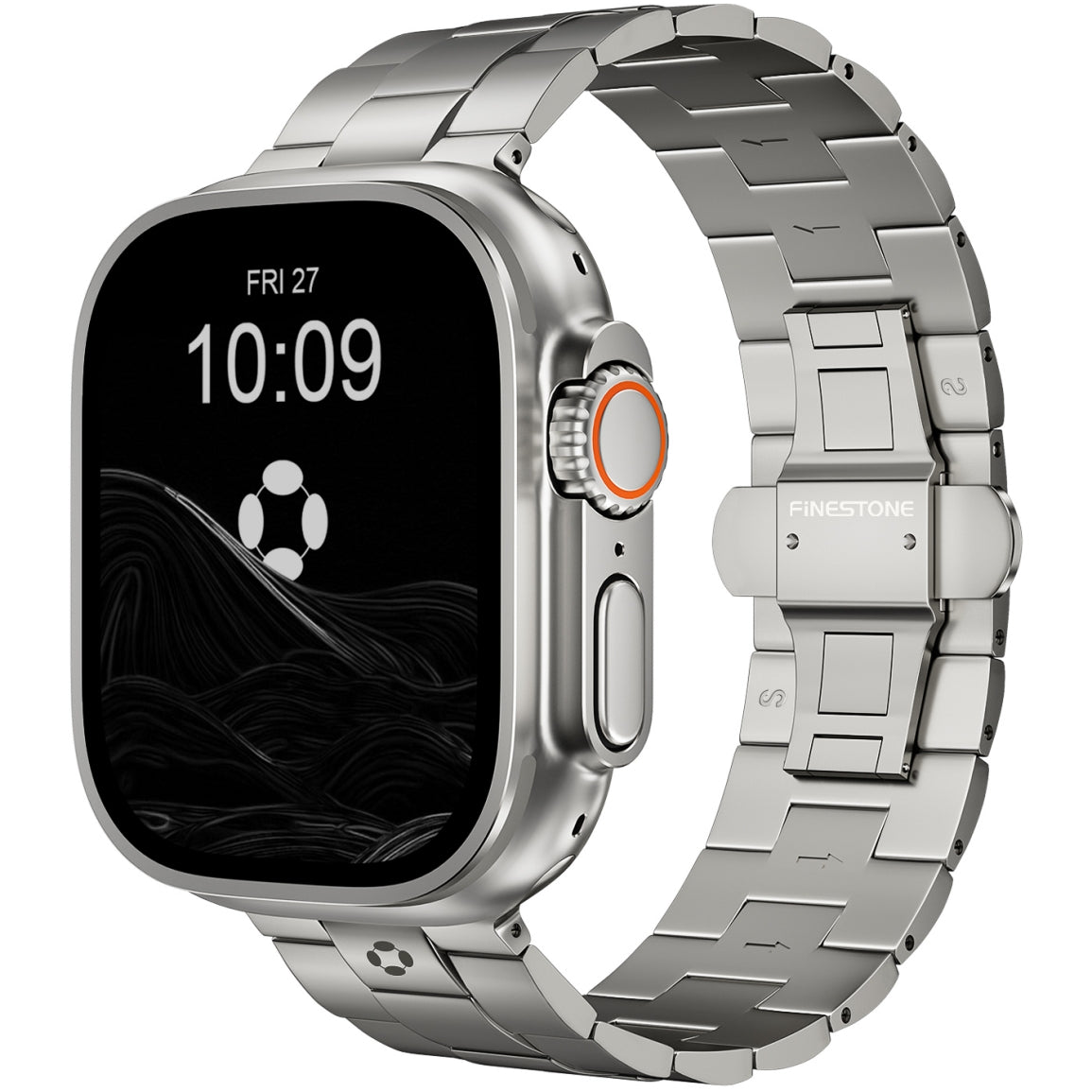
Some premium Apple Watch band makers, including Finestone, use titanium alloys strategically to balance strength, long-term durability, and a refined everyday feel—rather than focusing on marketing labels alone.
Which One Should You Choose?
Choose Pure Titanium if:
-
You prioritize comfort above all
-
You have sensitive skin
-
You prefer a lightweight, subtle look
-
You wear your watch all day, every day
Choose Titanium Alloy if:
-
You want maximum strength
-
You’re rough on your watch band
-
You prefer a more solid, premium feel
-
You value long-term structural durability
Common Myths About Titanium Materials
❌ “Titanium alloy isn’t real titanium”
False. Titanium alloys are still mostly titanium and widely used in aerospace and medical fields.
❌ “Pure titanium is always better”
Not necessarily. It depends on your lifestyle and wear habits.
❌ “Titanium doesn’t scratch”
No material is scratch-proof—only scratch resistant.